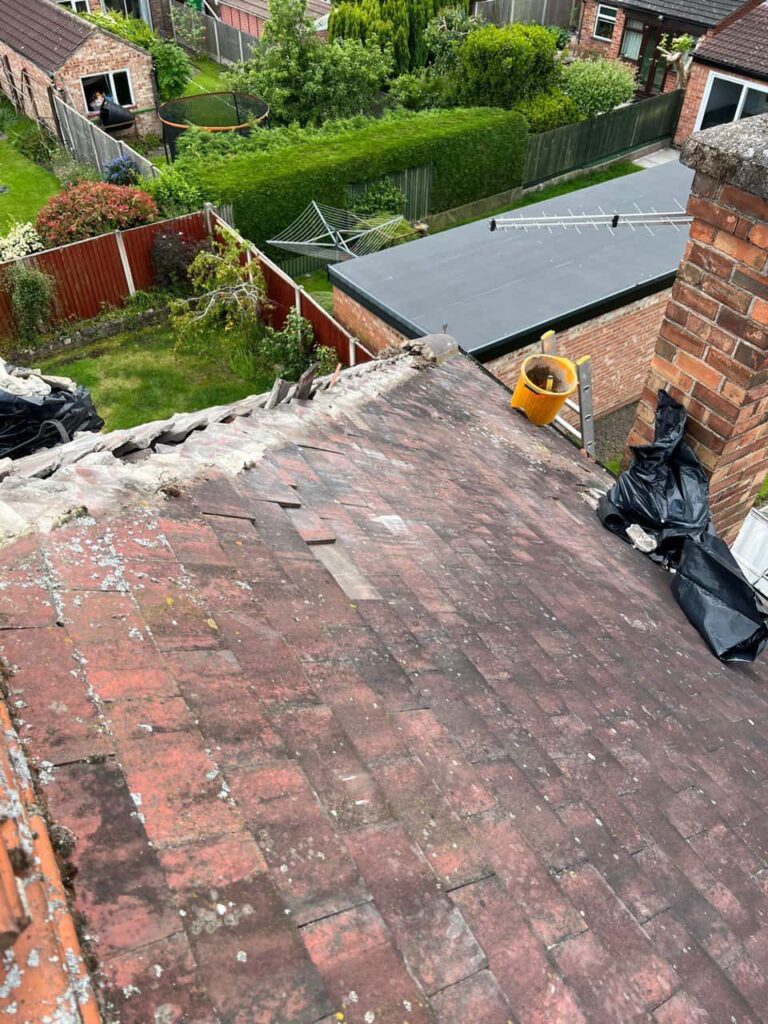
Wind damage to a roof is not always immediately visible. Missing tiles and fallen ridge sections are clear warning signs, but strong gusts can also loosen materials, weaken fixings and disturb roof details without leaving obvious damage at ground level.
For property owners in Bilston, West Midlands, recognising these subtle changes can help prevent a small weakness from developing into water ingress or more extensive deterioration. Following particularly windy weather, it is sensible to check for unusual signs and arrange a professional inspection if anything appears different.
Subtle Signs That Wind May Have Affected Your Roof
Wind creates pressure across a roof surface, particularly around edges, corners, ridges and other exposed areas. It can lift materials slightly without removing them completely. A roof may therefore continue to look intact while its weather resistance has already been reduced.
Tiles That Have Shifted Slightly
A roof tile does not need to fall away to become vulnerable. Wind can lift or move it just enough to affect its overlap with neighbouring tiles.
From the ground, look for tiles that appear uneven, raised or out of alignment. Even a narrow gap may allow wind-driven rain to reach the underlay. Once a fixing has loosened, the tile may also be more likely to move during the next period of strong weather.
New Rattling or Flapping Sounds
Unfamiliar noises from the roof during windy conditions should not be ignored. Rattling may indicate a loose tile, flashing section or roofline component, while a flapping sound could suggest that membrane or another material has become exposed.
The noise may stop when the wind drops, but the underlying defect will remain. Recording where the sound seems to originate can help a roofing professional focus the inspection.
Small Pieces of Material Around the Property
Fragments found below the roof can provide an early clue that something has deteriorated. These may include pieces of mortar, roofing felt, tile, pointing or sealant.
A small fragment does not always indicate major damage, but it should prompt a visual check. Mortar loss around ridges, verges or chimney details can leave nearby components less secure and more exposed to future weather.
Changes Around Flashing and Roof Junctions
Flashing protects vulnerable junctions where the roof meets features such as a chimney or adjoining wall. Wind can lift an edge, open a joint or weaken an existing fixing without detaching the material completely.
The resulting gap may be difficult to see from below. Indoors, an early sign may be a faint damp mark near a chimney breast or high on a wall following heavy rain.
Guttering That Has Changed Position
Strong wind can place pressure on gutters, fascia boards and downpipes. A gutter may begin to sag, pull slightly away from the fascia or lose the correct fall required to direct rainwater towards the outlet.
Signs of movement include water spilling from an unfamiliar point, a new gap behind the gutter or sections that no longer appear level. These problems can direct moisture onto the roofline and external walls.
Granules or Surface Debris in the Gutters
Some roof coverings can lose surface material when disturbed by severe weather. An unusual build-up of granules or roofing debris in the gutter may indicate that the covering has been scuffed, lifted or weakened.
Gutters naturally collect moss and general debris, so the finding must be considered alongside the roof’s condition. A sudden increase after windy weather is more significant than a gradual accumulation.
Draughts, Damp Odours or Light in the Loft
The loft can reveal damage that is not visible outside. New draughts may suggest that a tile or roof detail has moved. Small shafts of daylight can point to an opening, although some ventilation gaps are intentional and should be assessed correctly.
A damp or musty smell, moisture on timbers, disturbed insulation or dark marks on the underlay can also indicate water entry. These signs may appear before staining becomes visible on ceilings below.
Water Marks That Appear Only During Certain Weather
Wind-related roof defects do not always cause a continuous leak. Water may enter only when rain is driven from a particular direction, making the problem seem intermittent.
A stain that appears after windy rain but remains dry during ordinary rainfall can indicate a lifted tile, weakened flashing detail or exposed roof junction. Its position indoors may not identify the entry point because water can travel beneath the roof covering before becoming visible.
Why a Professional Roof Inspection Matters
Subtle wind damage can be difficult to assess safely from ground level. A professional inspection can examine tile alignment, fixings, ridge and verge details, flashing, roofline components and the condition beneath accessible areas of the covering.
This allows isolated movement to be corrected before surrounding materials are affected. It also helps establish whether the wind caused a new defect or exposed an existing weakness.
Homeowners should avoid climbing onto the roof, as displaced materials may be unstable and damage can be made worse by walking on the covering.
Conclusion
Less obvious signs of wind damage can include slightly raised tiles, unfamiliar roof noises, fallen fragments, displaced flashing, sagging gutters and intermittent damp marks. Although these changes may seem minor, they can reduce the roof’s ability to resist future wind and rain.
If you have noticed a change following strong weather in Bilston, West Midlands, contact Bilston Roofing Repairs to arrange a professional assessment. A timely inspection can identify the source of the problem and determine the most appropriate repair without overstating the work required.
Call us on: 01902 943 692
Click here to find out more about Bilston Roofing Repairs
Click here to complete our contact form and see how we can help with your roofing needs.